611Records
For fourteen years, a room on 4th Street was where Philadelphia went to hear what was next.This is the story of the store, the counter, and the people who kept coming back.
A Room, A Rack,
And A Turntable
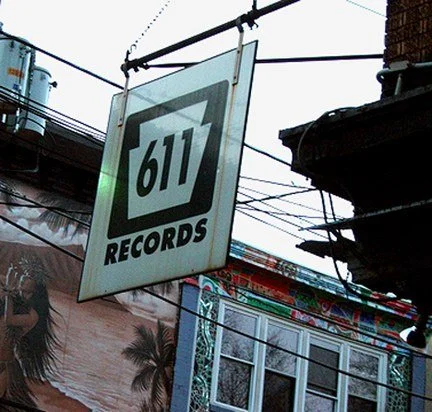
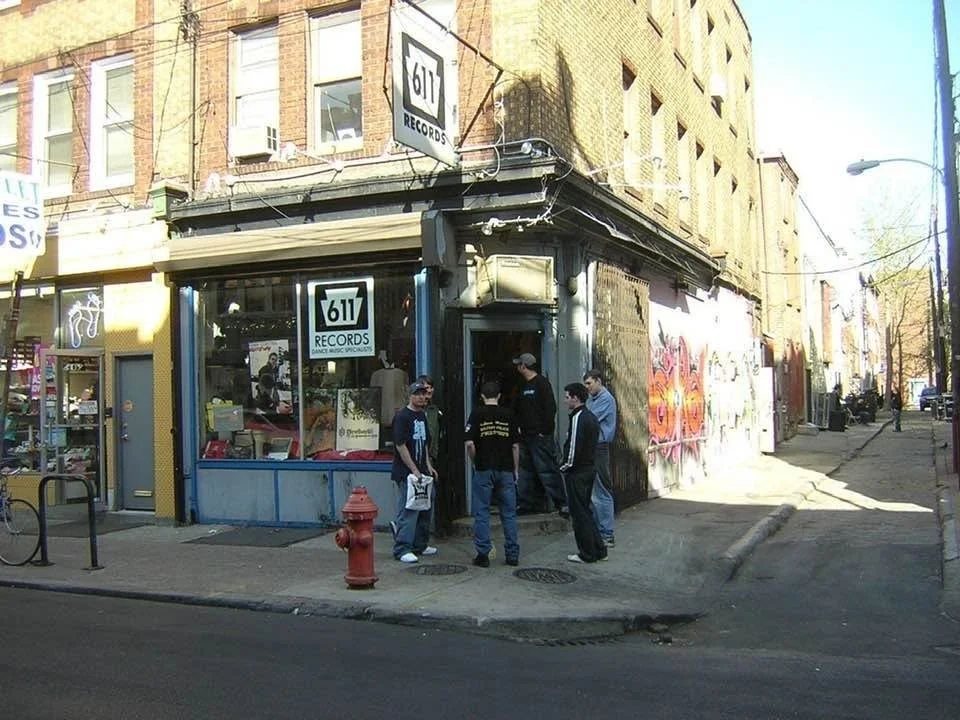
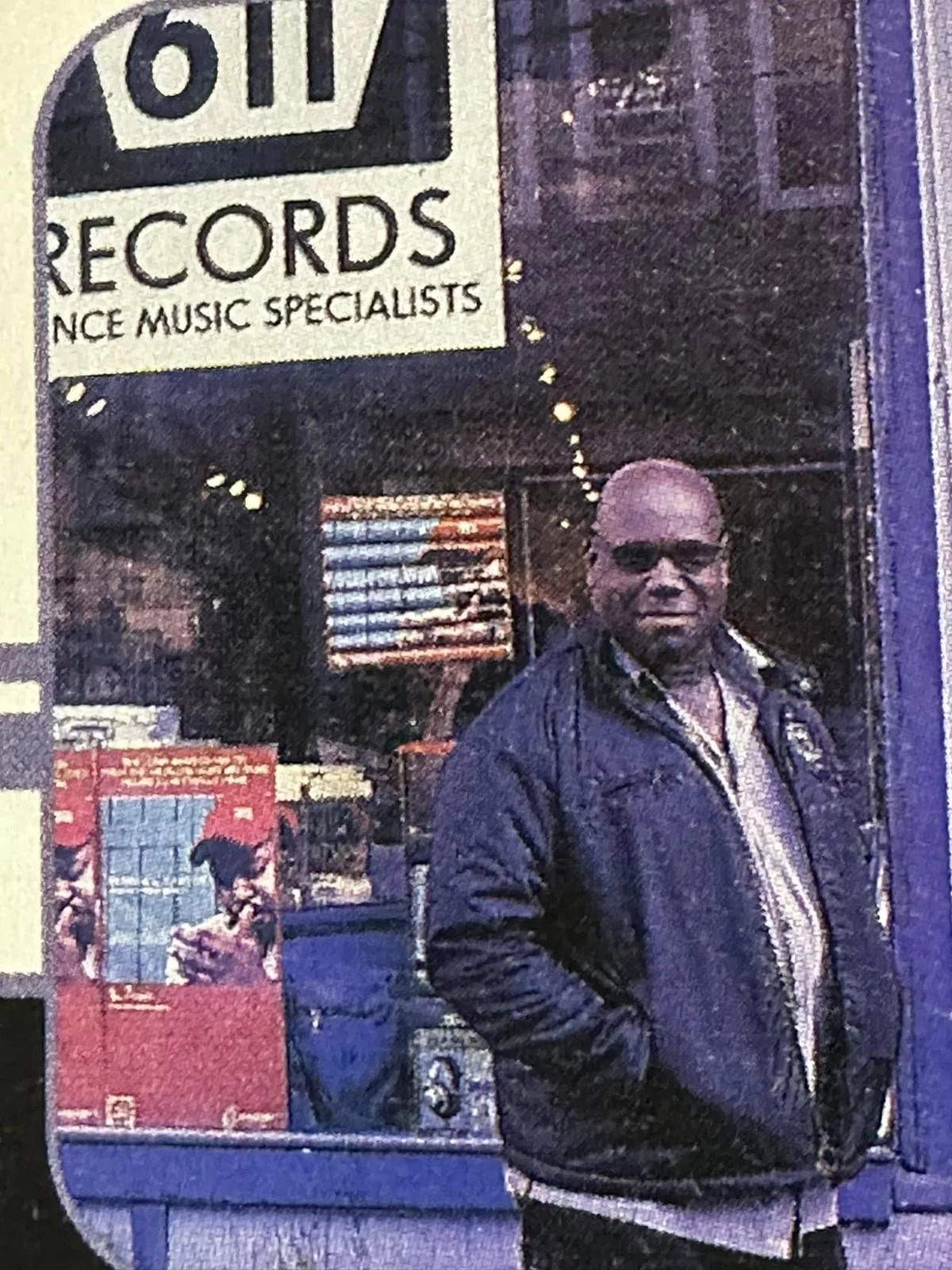
611 Records opened in 1993 at 611 South 4th Street, a few steps below South Street at the top of Fabric Row, in a city that had dancers and DJs but nowhere dependable to buy the records they were dancing to. The store took its name from the address.
It stocked what Philadelphia could not easily get: house, techno, drum & bass and jungle, arriving as imports and promos and white labels with nothing on them but a stamp. The bet was that if the right records were in the room, the right people would find the room.
For scale: Ovum Recordings, the label Josh Wink and King Britt started that would carry Philadelphia's name abroad, was founded in 1994. The store opened first — and Ovum would later move in upstairs.
Store 215-413-9100
Mail order 215-627-7260
8,000 People
In Germany
The same year 611 opened its doors, Nigel Richards played a show in Stuttgart, Germany to a crowd of roughly 8,000 people — the night that turned DJing from something he did into something he was going to keep doing. He came home to Philadelphia carrying two things that would shape the next fourteen years behind the counter: a radio show's worth of contacts who could get touring DJs through 611's door, and a stack of import records nobody else in the city was stocking.
Everyone Owned
Two Turntables
And A Mixer
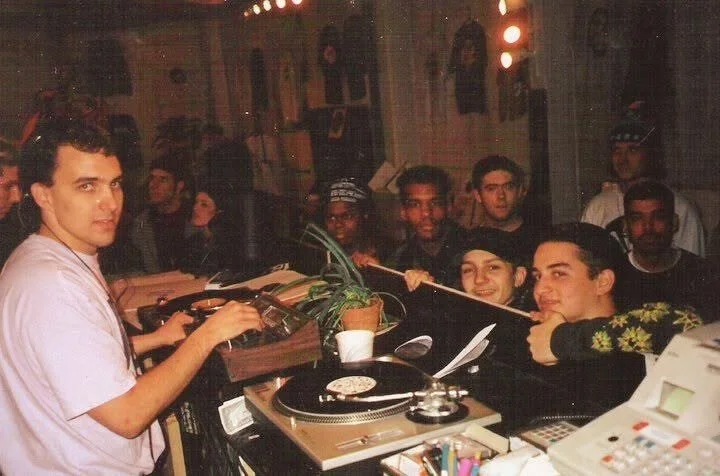
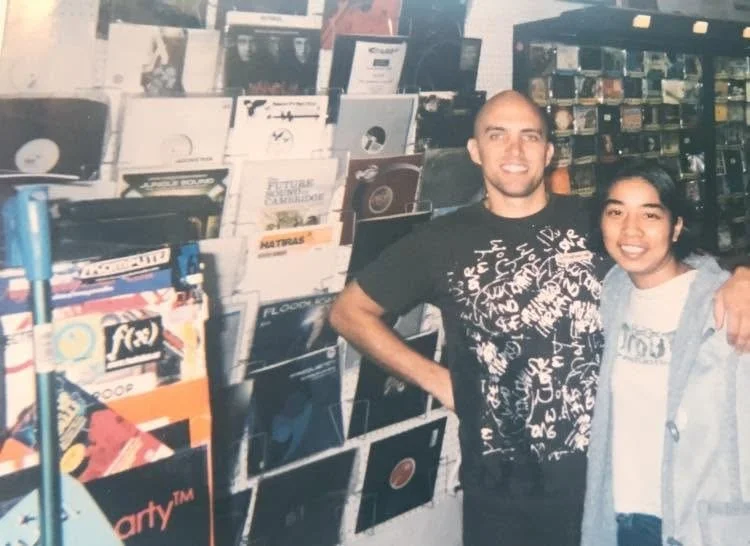
The counter was the point. You came in, you handed over a stack, and somebody behind the register cued them up one at a time while the room listened over your shoulder. Records got sold because a person you trusted put them on.
Back in the 90s when EVERYONE owned two turntables and a mixer, this place was ground zero. It was always crowded. I'd often have to wait for a turntable to sample the newest arrivals.
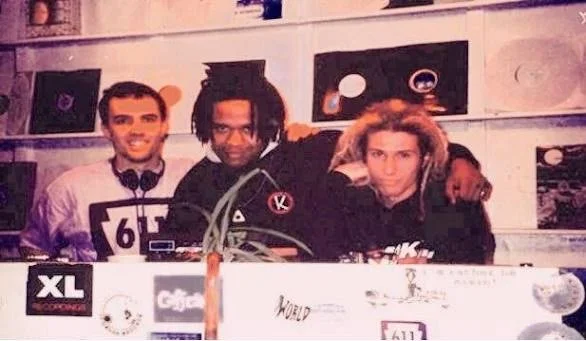
The first person hired was Josh Wink. He later moved Ovum Recordings, the label he had started with King Britt, into the office above the shop — so that for a stretch of the nineties the building held a record store on the ground floor, Ovum upstairs, and Society Hill Recordings on the third. Shop and label kept a close relationship the whole time. 611 South 4th Street was not simply a store that sold dance music; it was the address dance music in Philadelphia was run from.
Through the nineties the store was a working address for a generation of Philadelphia DJs — people who clerked there, spun there, or simply never left.
Behind the counter and behind the scenes, Mouse was the one who kept it running: an employee, and a key assistant to the success of the place, for years.
Where a name links out, it goes to that person's own page — a mix, a discography, a profile. Several of the people who worked here never put out a record under their own name and leave almost no trail online; they are listed all the same, because they were behind the counter. Corrections and additions welcome.
† Sean O'Neal, who recorded as Someone Else, is no longer with us. His records are still up.
Dieselboy has told the story himself: he had just moved from Pittsburgh, was sharing an apartment with Nigel Richards, and was “working at the shop during the week and playing shows on the weekends.” Carl Michaels started by hanging around, asked if they needed help, sold mixtapes at raves for a percentage, and ended up the store's house buyer.
The Catalog
Went National
611 was never just a Philadelphia stop. By 1998 the store was running mail order out of the same room on 4th Street, shipping import 12″s and white labels to dancers and DJs who had no local shop carrying what they needed. The earliest evidence we can point to is the store's own mail-order page, preserved by the Internet Archive's Wayback Machine on April 22, 1998. See the 1998 mail-order page →
A later snapshot, from September 6, 2011, shows the site further into its next chapter, after the shop on 4th Street had already closed. See the 2011 homepage →
A Random Week
On 4th Street
Monday. Slow as could be. The hours were noon to nine, and on a Monday nobody was up, so the store might open late. The one thing that got done was the ordering: the week's record orders were finalized and sent off.
Tuesday. Somebody had to be in by 9:30 in the morning to meet UPS. Johnny, the South Philly driver with the Italy tattoo on his arm and the brown sleeves rolled up, was usually already down the street by the time the door was unlocked, so the choice was to chase him down and beg him to loop back around, or to bring a hand truck and let him swing by later for the COD check. There were a lot of COD checks. Hundreds of them, plus payroll, signed by hand over the years, which is the accepted explanation for the state of Nigel's handwriting.
Then came the glamorous job of pricing. For the first few years that meant a grocery-store pricing wand and rolls of orange or white stickers that read $4.99, $6.99, $7.99 or $8.99. Later the store moved to FileMaker Pro and something like real inventory management. Eventually there was a barcode system: scan the record, create an inventory item, print a label with the genre, artist, title and price. We sure did love the data.
Around two or three in the afternoon things got serious. The regulars started coming in for the weekly imports and first dibs on the records that came in limited quantities — the jungle and drum & bass white labels, or the hot new house import from Holland that arrived fifty deep and was gone by closing.
Wednesday, once a month. Company breakfast at Philadelphia Deli, 10:30am. Attendance was optimistic; the staff were DJs who had gone to bed somewhere between two and five. Now and then there was a guest at the table — Larry Cohen of Egypt, Shampoo, Iss Fresh Fruit and Cuba Libre, or Josh Wink, whose Ovum Recordings had its label office directly above the store.
More of the week, and more stories, coming soon.
Then There
Were Two
The new records were at 611. Everything else went across the street to 612 — the second shop, for used stock and back catalog. When somebody in the city wanted to sell a collection, it usually ended up in one of the two rooms.
No photograph of 612 has surfaced yet. If you have one, it is the missing picture in this whole story.
Send a photo of 612When Nigel opened 612 across the street from 611, I honestly can say I never saw so many records being bought at any given moment. Nigel always somehow ended up with everyones record collections. Anytime someone wanted to sell a collection and we did'nt have the room for it, it went to 611.
The Download
Won
611 closed in the summer of 2007, fourteen and a half years after it opened. Nothing dramatic happened to it. The whole model came apart at once: the customers who used to come in every week were downloading instead, imports got expensive, and rent did not.
Adam X, who ran Sonic Groove in New York and closed after almost exactly the same run, put the arithmetic bluntly: “You would have to sell a 1000 records a month just to pay the rent.”
For a few weeks nobody was sure it was really over — the forums argued about whether the store was closing or moving. It was closing.
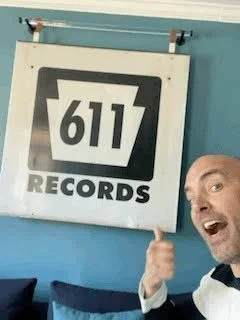
Nigel Richards has always been like family to us from the very minute he opened 611 in 1993 … Philadelphia carved out a nice little pool of talent which had 611 at the forefront of it all. … 611 and Sonic Groove both shared one exact trait. 14 1/2 years of doing business. Nothing lasts forever.
What Closed Was
A Retail Business
What did not close was everything that had passed across that counter.